Sunday, April 11, 2010
Getting the Widest Audience Possible
Frequently we talk about craft elements that make books must haves: characters, plot, setting, voice, theme, pacing, etc. These are all things that must make up a best seller, yes, and as a writer, one feels almost like one is trying to juggle a bunch of knives and flaming torches to get everything into a mere 400 pages. It’s no wonder we feel sliced up and set on fire at the end, trying to accomplish the impossible: the perfect book. No book is perfect. Not even a J. K. Rowling book. Still, as writers, it is important to understand what attracts a best-seller audience. That is, if your long-term goal is to write commercial fiction, it is best to understand the audience that buys it.
But there are books that come close. Sugar Daddy was one of the most perfect novels for me. And the taut-line tension and suspense in the Deathly Hallows nearly killed me trying to get to the end. More than voice, more than craft, more than talent—there are elements that make up commercial fiction. The things you have to deliver if you want the widest possible audience. You can’t please everyone individually; but collectively, there are things that people as a whole expect from their stories.
The Universal: writers should write about things readers care about—and that they care about. What does the large collective audience care about? Family. Friends. Love. Comedy. Drama. The little guy triumphing over the bully. Justice. Fairness. Hope. Survival. Success. How these things are defined is up to you. Family is different for everyone; and love certainly encompasses a number of possibilities.
The Hero’s Journey: A nobody suddenly gets pulled into a series of events he wanted nothing to do with and/or doesn’t have time for because he’s too busy trying to keep his current life from going down the crapper; however, he faces his insecurities and accomplishes his goals with a little help from his sidekick. If he’s lucky he may be able to blow something up and kiss a girl. The key point about the hero’s journey is this: if the hero grows—changes—he triumphs and is reborn; but if he doesn’t change, he’s roadkill. Heroes are heroic; and heroes bring change. If they’re not, they’re called tragic heroes because they usually die at the end. So if your story has a “happy” ending for your hero, it means your hero changed. Make sure your reader notices.
The Escapism: The collective audience needs to escape the daily grind and wants to read your books to feel better. Prozac for the brain. Accomplishing goals; getting the girl; winning the prize—these all make us feel good about ourselves, even if it is vicariously. We all want to feel good about ourselves. We all want to think we’re special and capable of greatness. Triumph over adversity. The Chariot card in tarot. I swear this motif of storytelling came out of the primordial ooze. Best of all, once we read about someone special who is capable of greatness, we feel more special and capable of greatness. Books feed the soul; they’re a place where we can recharge before we have to face the world again.
These are the things that do it for me in commercial fiction—and these needs aren’t met, I don’t consider it commercial fiction. (I.e. this is why Nicky Sparks will never be commercial to me—he offends points two and three.)
What qualities do you bring to your commercial fiction (assuming that is what you write)? Are they same as mine, or do you have others? What do you look for in the books you read? What are some of your favorite books that offer these qualities?
But there are books that come close. Sugar Daddy was one of the most perfect novels for me. And the taut-line tension and suspense in the Deathly Hallows nearly killed me trying to get to the end. More than voice, more than craft, more than talent—there are elements that make up commercial fiction. The things you have to deliver if you want the widest possible audience. You can’t please everyone individually; but collectively, there are things that people as a whole expect from their stories.
The Universal: writers should write about things readers care about—and that they care about. What does the large collective audience care about? Family. Friends. Love. Comedy. Drama. The little guy triumphing over the bully. Justice. Fairness. Hope. Survival. Success. How these things are defined is up to you. Family is different for everyone; and love certainly encompasses a number of possibilities.
The Hero’s Journey: A nobody suddenly gets pulled into a series of events he wanted nothing to do with and/or doesn’t have time for because he’s too busy trying to keep his current life from going down the crapper; however, he faces his insecurities and accomplishes his goals with a little help from his sidekick. If he’s lucky he may be able to blow something up and kiss a girl. The key point about the hero’s journey is this: if the hero grows—changes—he triumphs and is reborn; but if he doesn’t change, he’s roadkill. Heroes are heroic; and heroes bring change. If they’re not, they’re called tragic heroes because they usually die at the end. So if your story has a “happy” ending for your hero, it means your hero changed. Make sure your reader notices.
The Escapism: The collective audience needs to escape the daily grind and wants to read your books to feel better. Prozac for the brain. Accomplishing goals; getting the girl; winning the prize—these all make us feel good about ourselves, even if it is vicariously. We all want to feel good about ourselves. We all want to think we’re special and capable of greatness. Triumph over adversity. The Chariot card in tarot. I swear this motif of storytelling came out of the primordial ooze. Best of all, once we read about someone special who is capable of greatness, we feel more special and capable of greatness. Books feed the soul; they’re a place where we can recharge before we have to face the world again.
These are the things that do it for me in commercial fiction—and these needs aren’t met, I don’t consider it commercial fiction. (I.e. this is why Nicky Sparks will never be commercial to me—he offends points two and three.)
What qualities do you bring to your commercial fiction (assuming that is what you write)? Are they same as mine, or do you have others? What do you look for in the books you read? What are some of your favorite books that offer these qualities?
Saturday, April 10, 2010
Intellectual Chick P*rn
Are you sitting comfortably?
Terri is doing a Smokey and the Bandit run, so I thought I'd cover her Hottie's blog. But not with actual pictures, but a website. A website of hotties--and like the pictures in Harry Potter's world, they move and talk and they're so much more exciting.
This is my favorite. My clothes nearly fell off just listening to the first minute of it.
Greg Wise reads Persuasion
However, if you're having a very lazy Sunday and don't want to venture any further than these pages, Terri did say: "Put up that one of Crusoe!"
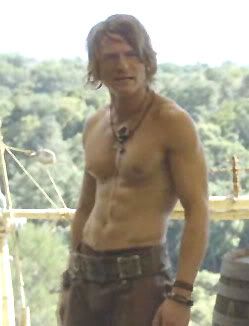
I'm sure next week, when she's not dodging the law, outracing the wind, she'll give you a slew of half-naked wonders to behold. Myself, I'm going to drool at the Carte Noire site. There is just something about Greg Wise...
Hope you're having a wonderful Sunday...
Terri is doing a Smokey and the Bandit run, so I thought I'd cover her Hottie's blog. But not with actual pictures, but a website. A website of hotties--and like the pictures in Harry Potter's world, they move and talk and they're so much more exciting.
This is my favorite. My clothes nearly fell off just listening to the first minute of it.
Greg Wise reads Persuasion
However, if you're having a very lazy Sunday and don't want to venture any further than these pages, Terri did say: "Put up that one of Crusoe!"
I'm sure next week, when she's not dodging the law, outracing the wind, she'll give you a slew of half-naked wonders to behold. Myself, I'm going to drool at the Carte Noire site. There is just something about Greg Wise...
Hope you're having a wonderful Sunday...
Thursday, April 8, 2010
Fallen Heroes and the Unlikely Hero
Captain Phil Harris

Next week, The Deadliest Catch starts its new season, April 13. Those who have followed this show for years got to know the men who they profile on the show. And in our own small ways, we like to think we know them well. And we miss them when they aren’t showing up on the television set.
These guys do an amazingly hard job, all for the sake of those who love crab and want to eat them. I don’t eat crab. No particular prejudice against them, just never developed the taste.
And the show is laced with profanities, stupid boy tricks and macho crap that can make a person nuts. But…it’s also a lot about tradition and family. The Hillstrand brothers share the captainship of the Time Bandit and family member step aboard. They buried their patriarch where they can salute him every time they return from a hard season.
The Northwestern has Sig Hansen and his brothers. And the Cornelia Marie had Phil Harris and his two sons, Josh and Jake. Phil passed away a few months ago, in the midst of filming. And he’s going to be missed. Not just by his family, though their claim is the most paramount one. But we’re gonna miss him.
He was a rough guy, didn’t get enough sleep, drank too much coffee, too many energy drinks, smoked wa-a-a-a-a-a-a-ay too much. We watched him two seasons ago struggle as a blood clot nearly killed him while fishing. (Or crabbing.) Saw him in the hospital, sneaking out for a smoke. He survived that and made it back to his boat. Until this season. He collapsed while unloading. I don’t know how the Discovery Channel is going to handle his death, midseason. But I know they consulted with his boys about how to do him justice.
He had sharp blue eyes and he loved his kids, loved having them on the boat with him. They drove him crazy, but you could see the love underneath all the yelling, cussing and slapping (brothers - they often smacked each other around. My DH, who has brothers, tells me this is normal for boys. My sis would hit me, but it wasn’t normal… But that’s my family dynamics!)
Captain Phil was a hero. And I think he’d be a fun hero to write about. He was covered with tattoos, had a body that looked worn and beaten and well used. And he had a sharp sense of humor, a phenomenal work ethic and a true sense of responsibility regarding what he owed his crew.
And I wonder about the women these men leave behind when they go out for weeks in the most dangerous fishing grounds there are… And their families, what is it like for them? Sig Hansen, of the Northwestern, has a pair of girls in his family. I somehow doubt he’ll want one of his girls taking up the call. His brother Edgar? Don’t know about his family. And there is another brother onboard, but he’s more camera shy.
The Hillstrands have a lot of family aboard. Jonathon and Andy swap captainship, one does king crab, the other opillio. They have another brother on board, Neal, and Jonathon’s son, Scott. I’m not sure, but he looks to be the one to keep up the family dynasty.
Two brothers, Keith and Monte Colburn work the Wizard, another boat the cameras often follow. The boats have changed over the years. I think the Northwestern is the only one that has been in from the beginning and that’s because Sig is part of the program.
Do these men do heroic things? Well, they don’t fight fires…unless the boat catches on fire. They don’t go out on rescue missions, except when they do. When a fellow fisherman is in trouble and they can get close. One year, Captain Jonathon, I think it was, saw a guy fall from another boat and they managed to save his life. They’ve kept cameramen from certain injury time and again. And when Captain Phil fell ill, the relief captain asked one of the camera guys to keep an eye on him.
They work hard, they play hard and they can be brutal to each other. But they care. A young man on the Northwestern lost his sister last year and they did everything possible to see him back to port so he could return to his family, to mourn. It was touching to see how these tough guys cared and showed it. And though the audio caught his sorrow, the cameras stayed away, asked by Sig to give the kid some room.
 The men who go down to the sea in ships. The merchants, the fishermen, the Navy, Coast Guard, Marines…even the great yachtsmen (Go, Larry Ellison and congrats on bringing the America’s Cup to San Francisco! Whoop!) They work with a fickle thing. The sea. Which I love, but I know doesn’t even know I exist. It isn’t personal, it’s just doing what it does.
I’ll miss Captain Phil. And I wonder about his two sons. How will they pull together to keep the Cornelia Marie in the fleet? Neither seem old enough to take on the captainship, but circumstances may have left them little choice. Phil wasn’t ready to go, that I’m sure of. He had a lot more life to live, but it wasn’t meant to be. I understand he fell into a coma, but woke up enough to tell the cameramen to stay, this was part of the show.
The years haven’t been kind to the men. I see earlier shows and how much younger Sig looked! How worn he looks now…they all show the wear and tear of a tough job.
But they deserve a book, or a dozen. And I wonder, who will take up that banner? There is a NASCAR series out there. Firefighters, Navy Seals, Police… Who is going to take up the romance of the Alaskan Crab Fisherman?
Staring Captain Phil Harris…who I bet had a fascinating life…
We’ll miss you, Captain Phil!
These guys do an incredibly dangerous job, for cash. But it’s their everyday job. What everyday heroes have you read about? Seen cast as romance heroes and done a damned fine job of it? Delivery men? Personal trainers? Butchers?
And heroines? Our heroines often are simple working women. I have to admit, my heroes? Well, I sat down to count it out… Two pirate captains, one physician, one carpenter, one BDSM master, a mercenary, several simply independently wealthy. Heroines? Ah….a magical witch, a writer, a bookseller, a bartender, a mercenary… I’m lazy, I hate research. Though I gave Emily a side to earn money with, she crafts handbound books…
What about you? What professions do you most often write about? Read about? I enjoy reading the craftsie type mysteries to learn about assorted hobbies. Where do your heroes come from? Your heroines?
Any heroes out there you think deserve their own romance book? Ever watch The Deadliest Catch and thought, “I’m never eating crab again…this is nuts!”
Next week, The Deadliest Catch starts its new season, April 13. Those who have followed this show for years got to know the men who they profile on the show. And in our own small ways, we like to think we know them well. And we miss them when they aren’t showing up on the television set.
These guys do an amazingly hard job, all for the sake of those who love crab and want to eat them. I don’t eat crab. No particular prejudice against them, just never developed the taste.
And the show is laced with profanities, stupid boy tricks and macho crap that can make a person nuts. But…it’s also a lot about tradition and family. The Hillstrand brothers share the captainship of the Time Bandit and family member step aboard. They buried their patriarch where they can salute him every time they return from a hard season.
The Northwestern has Sig Hansen and his brothers. And the Cornelia Marie had Phil Harris and his two sons, Josh and Jake. Phil passed away a few months ago, in the midst of filming. And he’s going to be missed. Not just by his family, though their claim is the most paramount one. But we’re gonna miss him.
He was a rough guy, didn’t get enough sleep, drank too much coffee, too many energy drinks, smoked wa-a-a-a-a-a-a-ay too much. We watched him two seasons ago struggle as a blood clot nearly killed him while fishing. (Or crabbing.) Saw him in the hospital, sneaking out for a smoke. He survived that and made it back to his boat. Until this season. He collapsed while unloading. I don’t know how the Discovery Channel is going to handle his death, midseason. But I know they consulted with his boys about how to do him justice.
He had sharp blue eyes and he loved his kids, loved having them on the boat with him. They drove him crazy, but you could see the love underneath all the yelling, cussing and slapping (brothers - they often smacked each other around. My DH, who has brothers, tells me this is normal for boys. My sis would hit me, but it wasn’t normal… But that’s my family dynamics!)
Captain Phil was a hero. And I think he’d be a fun hero to write about. He was covered with tattoos, had a body that looked worn and beaten and well used. And he had a sharp sense of humor, a phenomenal work ethic and a true sense of responsibility regarding what he owed his crew.
And I wonder about the women these men leave behind when they go out for weeks in the most dangerous fishing grounds there are… And their families, what is it like for them? Sig Hansen, of the Northwestern, has a pair of girls in his family. I somehow doubt he’ll want one of his girls taking up the call. His brother Edgar? Don’t know about his family. And there is another brother onboard, but he’s more camera shy.
The Hillstrands have a lot of family aboard. Jonathon and Andy swap captainship, one does king crab, the other opillio. They have another brother on board, Neal, and Jonathon’s son, Scott. I’m not sure, but he looks to be the one to keep up the family dynasty.
Two brothers, Keith and Monte Colburn work the Wizard, another boat the cameras often follow. The boats have changed over the years. I think the Northwestern is the only one that has been in from the beginning and that’s because Sig is part of the program.
Do these men do heroic things? Well, they don’t fight fires…unless the boat catches on fire. They don’t go out on rescue missions, except when they do. When a fellow fisherman is in trouble and they can get close. One year, Captain Jonathon, I think it was, saw a guy fall from another boat and they managed to save his life. They’ve kept cameramen from certain injury time and again. And when Captain Phil fell ill, the relief captain asked one of the camera guys to keep an eye on him.
They work hard, they play hard and they can be brutal to each other. But they care. A young man on the Northwestern lost his sister last year and they did everything possible to see him back to port so he could return to his family, to mourn. It was touching to see how these tough guys cared and showed it. And though the audio caught his sorrow, the cameras stayed away, asked by Sig to give the kid some room.
The men who go down to the sea in ships. The merchants, the fishermen, the Navy, Coast Guard, Marines…even the great yachtsmen (Go, Larry Ellison and congrats on bringing the America’s Cup to San Francisco! Whoop!) They work with a fickle thing. The sea. Which I love, but I know doesn’t even know I exist. It isn’t personal, it’s just doing what it does.I’ll miss Captain Phil. And I wonder about his two sons. How will they pull together to keep the Cornelia Marie in the fleet? Neither seem old enough to take on the captainship, but circumstances may have left them little choice. Phil wasn’t ready to go, that I’m sure of. He had a lot more life to live, but it wasn’t meant to be. I understand he fell into a coma, but woke up enough to tell the cameramen to stay, this was part of the show.
The years haven’t been kind to the men. I see earlier shows and how much younger Sig looked! How worn he looks now…they all show the wear and tear of a tough job.
But they deserve a book, or a dozen. And I wonder, who will take up that banner? There is a NASCAR series out there. Firefighters, Navy Seals, Police… Who is going to take up the romance of the Alaskan Crab Fisherman?
Staring Captain Phil Harris…who I bet had a fascinating life…
We’ll miss you, Captain Phil!
These guys do an incredibly dangerous job, for cash. But it’s their everyday job. What everyday heroes have you read about? Seen cast as romance heroes and done a damned fine job of it? Delivery men? Personal trainers? Butchers?
And heroines? Our heroines often are simple working women. I have to admit, my heroes? Well, I sat down to count it out… Two pirate captains, one physician, one carpenter, one BDSM master, a mercenary, several simply independently wealthy. Heroines? Ah….a magical witch, a writer, a bookseller, a bartender, a mercenary… I’m lazy, I hate research. Though I gave Emily a side to earn money with, she crafts handbound books…
What about you? What professions do you most often write about? Read about? I enjoy reading the craftsie type mysteries to learn about assorted hobbies. Where do your heroes come from? Your heroines?
Any heroes out there you think deserve their own romance book? Ever watch The Deadliest Catch and thought, “I’m never eating crab again…this is nuts!”
Wednesday, April 7, 2010
Surprise me!
I saw this commercial the other day. It was one of those that seemed cutely obvious, and I was sure exactly what would happen. And then . . . something else happened.
A huge shock, I know.
But I realized how seldom I'm surprised by something. This commercial was hilarious, to me, not because of how it ended, but because it ended in a way that surprised me. (you don't need any volume to enjoy)
It's funny, right? Is it just me?
It happened again, last night. This time with drama, not comedy. I was watching Criminal Minds, and it was a perfectly progressing mystery. It was wrapped up neatly, I was thoroughly pleased and then . . . I gasped. It was just a tiny thing, right at the end, but it was thrilling. I sat up and took notice.
But the really cool thing I noticed is the important part. Neither of these events was shocking or over the top. Neither was a big stretch of the imagination. A guy's toupe falling off isn't particularly funny, and the scene in Criminal Minds (I don't want to give away the ending!) wasn't really any big thing. They were simply unexpected.
Just by being unexpected, they increased the effect, the humor in the commercial and the thrill in the drama TV show.
Have you come across something unexpected or surprising lately? Did it add to the effect? Got any tips for coming up with the unexpected?
A huge shock, I know.
But I realized how seldom I'm surprised by something. This commercial was hilarious, to me, not because of how it ended, but because it ended in a way that surprised me. (you don't need any volume to enjoy)
It's funny, right? Is it just me?
It happened again, last night. This time with drama, not comedy. I was watching Criminal Minds, and it was a perfectly progressing mystery. It was wrapped up neatly, I was thoroughly pleased and then . . . I gasped. It was just a tiny thing, right at the end, but it was thrilling. I sat up and took notice.
But the really cool thing I noticed is the important part. Neither of these events was shocking or over the top. Neither was a big stretch of the imagination. A guy's toupe falling off isn't particularly funny, and the scene in Criminal Minds (I don't want to give away the ending!) wasn't really any big thing. They were simply unexpected.
Just by being unexpected, they increased the effect, the humor in the commercial and the thrill in the drama TV show.
Have you come across something unexpected or surprising lately? Did it add to the effect? Got any tips for coming up with the unexpected?
Tuesday, April 6, 2010
Hierarchy of Avoidance
I've commented here recently about my "Hierarchy of Avoidance", and ever since then, people have been clamoring to hear more. (By "clamoring" I mean I got an email, from one person. And it was about something else entirely. But it WAS on the same day I made my initial comment.)
So anyway, my "Hierarchy of Avoidance" theory. Actually, it's not really fair to call it a theory, since I've used it so many years now. It's definitely become a lifestyle, and a very productive, workable one.
Don't be put off by the word "avoidance". At first glance it may seem like it's in the same category as procrastination. But this isn't the case at all. The Hierarchy of Avoidance is actually a useful tool for getting things DONE, whereas procrastination. . .well, we all know it just stockpiles tasks until there's so many of them that you just get buried, and then you're tapping out a Morse code signal from inside the rubble, hoping for rescue (preferably from a Hottie with a refreshing beverage).
The important thing to remember about the Hierarchy of Avoidance is this: Not All Tasks Are Created Equal.
There is always a WORSE task than the one you don't want to do. Think of it as a Food Pyramid for To Do lists.
Now I'm not advocating that you ignore tasks, because that would turn into the Hierarchy of Ignorance, and that's a different situation entirely (and deserves its own post, probably on a day when the PMS needs an outlet for vent-ilation).
Remember, with my patented HOA program, you actually get things done, by avoiding other things you don't want to do. You can accomplish a task that seems yucky, or too difficult, or agonizingly debilitating – by comparing it to something that is even MORE yucky, MORE difficult, or WAY MORE debilitating to your psyche.
Ready to give it a try? Okay. Deep breaths, through the nose. And exhale, repeating after me: ACCOMPLISHMENT, through AVOIDANCE.
I actually used this application on some recent revisions. (That's right. I do all the rigorous testing beforehand so you can enjoy the final product without any bugs.) Anyway, there were several different items in this list of revisions, and while all of them were challenging, it can't be a big spoiler when I say some tasks were worse than others.
So I whipped out my HOA chart (don't expect to see this in stores right away, since it's still in beta form). I wrote down what I needed to accomplish, and then re-arranged the chores according to their relative Avoidance Quotient. Actually, I shifted them around so many times, it looked like I was practicing for a three-card monte competition.
So what did I have to avoid? A new love scene. Okay, that's not as bad as this one, strengthening the conflict. And all those words I repeat over and over and over. . .yikes. That went straight to the bottom of the pyramid, because apparently I only use three different words to tell an entire 80,000 word story, so this would require a little more creative effort before it was off the list.
Even though it seemed daunting at first, I avoided, systematically, until everything was accomplished. Once I'd ninja-kicked the simpler tasks out of the way, I was confident and pumped up, ready to kick ass on the next thing on the chart. Amazingly, that item didn't seem so bad anymore, because there was SOMETHING WORSE than that!
One last insider tip: don't feel like you can't mix and match avoidance chores. This blog post was accomplished in record time because I was avoiding unpacking some boxes that have been in storage for two years. And the scene in my WIP that's making me grab a bottle of antacids is getting done next because I'm avoiding vacuuming out the sand that's accumulated in my car all winter.
So tell me, what are you going to avoid today? And how are you going to avoid it? Be creative. Tell me what you're going to accomplish with your writing today by avoiding another task, writing-related or not.
So anyway, my "Hierarchy of Avoidance" theory. Actually, it's not really fair to call it a theory, since I've used it so many years now. It's definitely become a lifestyle, and a very productive, workable one.
Don't be put off by the word "avoidance". At first glance it may seem like it's in the same category as procrastination. But this isn't the case at all. The Hierarchy of Avoidance is actually a useful tool for getting things DONE, whereas procrastination. . .well, we all know it just stockpiles tasks until there's so many of them that you just get buried, and then you're tapping out a Morse code signal from inside the rubble, hoping for rescue (preferably from a Hottie with a refreshing beverage).
The important thing to remember about the Hierarchy of Avoidance is this: Not All Tasks Are Created Equal.
There is always a WORSE task than the one you don't want to do. Think of it as a Food Pyramid for To Do lists.
Now I'm not advocating that you ignore tasks, because that would turn into the Hierarchy of Ignorance, and that's a different situation entirely (and deserves its own post, probably on a day when the PMS needs an outlet for vent-ilation).
Remember, with my patented HOA program, you actually get things done, by avoiding other things you don't want to do. You can accomplish a task that seems yucky, or too difficult, or agonizingly debilitating – by comparing it to something that is even MORE yucky, MORE difficult, or WAY MORE debilitating to your psyche.
Ready to give it a try? Okay. Deep breaths, through the nose. And exhale, repeating after me: ACCOMPLISHMENT, through AVOIDANCE.
I actually used this application on some recent revisions. (That's right. I do all the rigorous testing beforehand so you can enjoy the final product without any bugs.) Anyway, there were several different items in this list of revisions, and while all of them were challenging, it can't be a big spoiler when I say some tasks were worse than others.
So I whipped out my HOA chart (don't expect to see this in stores right away, since it's still in beta form). I wrote down what I needed to accomplish, and then re-arranged the chores according to their relative Avoidance Quotient. Actually, I shifted them around so many times, it looked like I was practicing for a three-card monte competition.
So what did I have to avoid? A new love scene. Okay, that's not as bad as this one, strengthening the conflict. And all those words I repeat over and over and over. . .yikes. That went straight to the bottom of the pyramid, because apparently I only use three different words to tell an entire 80,000 word story, so this would require a little more creative effort before it was off the list.
Even though it seemed daunting at first, I avoided, systematically, until everything was accomplished. Once I'd ninja-kicked the simpler tasks out of the way, I was confident and pumped up, ready to kick ass on the next thing on the chart. Amazingly, that item didn't seem so bad anymore, because there was SOMETHING WORSE than that!
One last insider tip: don't feel like you can't mix and match avoidance chores. This blog post was accomplished in record time because I was avoiding unpacking some boxes that have been in storage for two years. And the scene in my WIP that's making me grab a bottle of antacids is getting done next because I'm avoiding vacuuming out the sand that's accumulated in my car all winter.
So tell me, what are you going to avoid today? And how are you going to avoid it? Be creative. Tell me what you're going to accomplish with your writing today by avoiding another task, writing-related or not.
Sunday, April 4, 2010
A Case for Pantsers: Writing Your Book Through Inquiry
Recently I read an article my boss wrote about science education and inquiry. He uses a lot of boring and technical language in his article, but since we’re pirates and have shorter attention spans, the term inquiry amounts to a bastardized version of this: nurturing people’s curiosity to allow them to investigate something (i.e. Why do magnets only stick to some kinds of metal?) without telling them what’s “supposed” to happen. You let them take their pre-conceived notions to the game; give it their best shot; then have them sum up the experience after the fact. Then you go over it again, straighten out the misconceptions, and voila, they supposedly have true understanding of how it all works. He was particularly scathing about the practice of “cookbook” teaching, where you’re given an assignment with all the steps to tell you what’s supposed to happen when and the answer at the end. All formula, but no passion or room for mistakes or taking chances. You may come to the right answer, but did you really believe it or care? Hands-on experience, I surmised from his article, is the best teacher to understanding and owning a subject.
To which I thought, hands-on experience and inquiry can also be the best teachers for writing a book.
In inquiry, you should come out of the experience having gained knowledge you didn’t have before—you are altered, you have grown; and with each book you write, I believe not only do the characters have an arc, showing where they change and grow as heroes; but we, the authors, are altered and grow with each book we create. We learn something more about craft; we grow as a writer; we change our perceptions—and audiences’ perceptions—about what can and cannot happen in a novel. Sometimes we come to the absolutely wrong conclusion, have to go back, correct the mistakes, but in the end, we know the subject of our book with absolute clarity. We can show it to anyone.
We should always tackle our books with inquiry and leave the cookbook approach for the kitchen. Romances, on the whole (as Nicholas Sparks will tell you), have the same cyclical journey. Most of us have read enough romances to recognize the beats of the story almost instinctively. First kiss, page 80. Sex, page 200. Black moment around page 300 or 330, depending on the length of the book you’re reading. There’s the inciting incident: boy meets girl or boy pisses off girl; and there are the handful of Turning Points, where you don’t know if you’re coming or going; and of course, the climax and resolution, most often resulting in a HEA or HFN ending. (That is, unless you’re Nicholas Sparks.)
The same beats can be identified in mysteries, horror novels, fantasy, and thriller. Commercial fiction follows beats. Audiences expect a satisfying ending of some sort from the novel: the guy gets the girl; the killer is caught; the ring is found or quest is completed; and the world is saved. Clearly there is a bit of “formula” involved, based on these expectations.
But just because a story follows genre expectations, it doesn’t mean it needs to follow the cookbook approach. There is still room for inquiry. You are still solving for knowledge you didn’t know about yourself or your characters, knowledge that you won’t quite know everything about until you get to the end. I think that is one of the most rewarding things about finishing a novel. You feel like you know something new and different about yourself. Something more than “I am a person who can write a 400 page book.” Your views, perceptions, philosophies, beliefs are there for everyone to read—whether you’re aware you had those particular beliefs or not. I think there are some perceptions and beliefs we prefer not to acknowledge or think about because they’re not comfortable; and writing forces us outside of our comfort zone of what we’re allowed to feel or believe. Except it allows us to do it through characters (role-playing), where it’s safer. We get to resolve our conflicts with these beliefs safely too.
A long-winded way of saying: writing is cheap therapy.
So yes, some days you’ll write and it will be like you can’t keep your fingers going fast enough; and some days, it will be like you have to force out every word from behind your teeth. Honestly that’s not much different than going to the therapist. Some days you won’t shut up; some days, you want to do nothing but plead the fifth. In the end though, you come out realizing you’re not as screwed up as you thought you were.
I hope I feel that way about this novel when I’m done: it’s not as screwed up as I thought it was. And in the meanwhile, I can feel better that I don’t know absolutely everything about my characters in the beginning of the experiment—that we’re all just doing this inquiry together, and maybe by the time I finish, my pre-conceived notions of how I think Adam should behave and Eve should feel will be flipped on their head. And that’s just fine. That’s how the science of writing works. You don’t know; you just experiment.
So what experiments have you done in your writing lately? Do you think you know a bit more about yourself after you’ve written something particularly hard or emotional? Do you read some books and think you know something about the author? (I’m reading one called The Accidental Bestseller and I rather feel this way; and some of Jenny Crusie’s books, I feel this way.) Do you like formula but hate cookbook, or does it matter?
To which I thought, hands-on experience and inquiry can also be the best teachers for writing a book.
In inquiry, you should come out of the experience having gained knowledge you didn’t have before—you are altered, you have grown; and with each book you write, I believe not only do the characters have an arc, showing where they change and grow as heroes; but we, the authors, are altered and grow with each book we create. We learn something more about craft; we grow as a writer; we change our perceptions—and audiences’ perceptions—about what can and cannot happen in a novel. Sometimes we come to the absolutely wrong conclusion, have to go back, correct the mistakes, but in the end, we know the subject of our book with absolute clarity. We can show it to anyone.
We should always tackle our books with inquiry and leave the cookbook approach for the kitchen. Romances, on the whole (as Nicholas Sparks will tell you), have the same cyclical journey. Most of us have read enough romances to recognize the beats of the story almost instinctively. First kiss, page 80. Sex, page 200. Black moment around page 300 or 330, depending on the length of the book you’re reading. There’s the inciting incident: boy meets girl or boy pisses off girl; and there are the handful of Turning Points, where you don’t know if you’re coming or going; and of course, the climax and resolution, most often resulting in a HEA or HFN ending. (That is, unless you’re Nicholas Sparks.)
The same beats can be identified in mysteries, horror novels, fantasy, and thriller. Commercial fiction follows beats. Audiences expect a satisfying ending of some sort from the novel: the guy gets the girl; the killer is caught; the ring is found or quest is completed; and the world is saved. Clearly there is a bit of “formula” involved, based on these expectations.
But just because a story follows genre expectations, it doesn’t mean it needs to follow the cookbook approach. There is still room for inquiry. You are still solving for knowledge you didn’t know about yourself or your characters, knowledge that you won’t quite know everything about until you get to the end. I think that is one of the most rewarding things about finishing a novel. You feel like you know something new and different about yourself. Something more than “I am a person who can write a 400 page book.” Your views, perceptions, philosophies, beliefs are there for everyone to read—whether you’re aware you had those particular beliefs or not. I think there are some perceptions and beliefs we prefer not to acknowledge or think about because they’re not comfortable; and writing forces us outside of our comfort zone of what we’re allowed to feel or believe. Except it allows us to do it through characters (role-playing), where it’s safer. We get to resolve our conflicts with these beliefs safely too.
A long-winded way of saying: writing is cheap therapy.
So yes, some days you’ll write and it will be like you can’t keep your fingers going fast enough; and some days, it will be like you have to force out every word from behind your teeth. Honestly that’s not much different than going to the therapist. Some days you won’t shut up; some days, you want to do nothing but plead the fifth. In the end though, you come out realizing you’re not as screwed up as you thought you were.
I hope I feel that way about this novel when I’m done: it’s not as screwed up as I thought it was. And in the meanwhile, I can feel better that I don’t know absolutely everything about my characters in the beginning of the experiment—that we’re all just doing this inquiry together, and maybe by the time I finish, my pre-conceived notions of how I think Adam should behave and Eve should feel will be flipped on their head. And that’s just fine. That’s how the science of writing works. You don’t know; you just experiment.
So what experiments have you done in your writing lately? Do you think you know a bit more about yourself after you’ve written something particularly hard or emotional? Do you read some books and think you know something about the author? (I’m reading one called The Accidental Bestseller and I rather feel this way; and some of Jenny Crusie’s books, I feel this way.) Do you like formula but hate cookbook, or does it matter?
Thursday, April 1, 2010
The Death of Good News
Say it ain’t so.
Yes, I’m feeling it lately. I read my local big town newspaper headlines everyday. (The San Jose Mercury. Lots of news from the Silicon Valley.) I seldom read an entire story. I figure the headline and the first paragraph should do the job. And lately…all the news is bad news. I swear, from declining sea otter populations on the California coast to a new massive round of layoffs to Christian militia to… I’m thinking of giving up the newspaper. I don’t watch the television news anymore…unless it’s the occasional Keith Olbermann just to chuckle at how absurd life is sometimes.
It’s everywhere! The newbies for RT are freaking out in despair over writing blocks. Friends are dealing with health/job/relative problems. The publishing world is frozen over all the changes taking over the ballroom and trying to pick the best dance partner.
I’m just tired of bad news.
So, let’s figure out some good news to share.
See this picture?
This is Friskee. I love his smile. When I was dog searching early last year, I found his picture on an adoption site and just copied it because it made me smile. Study Friskee…this is an older dog and look at him! Doesn’t he make you smile?
Let’s look at him again…
OK, I feel better.
Dogs know how to do it. I wonder what sort of book a dog would write. HEA would be all about the best way to sprawl on the couch. Depending on the dog, it would be next to a human or just somewhere close to the human. (I’ve owned both sorts of dogs. The ones that grumble if you touch them while they’re sleeping and the ones who prefer head on lap.)
Romances would be fleeting, fabulous and all about the sex. (I could write this.)
Conflict would be about who to play with at the dogpark, what that squirrel is doing in that tree and can I catch that rabbit? Angst would involve the food not being shared by resident humans and why isn’t it dinner time right now?
Unrequited love? Well, we’ve all known those neurotic type dogs who fixate on special toys and do disgusting things to them… Let’s not go there.
I’ve read a fair amount of dog stories. From the first loves of “Big Red” and “Lassie Come Home” to John Katz and his fascination with Border Collies… And to Merrill Markoe and “What The Dogs Have Taught Me” and her various books involving conversations humans have with their dogs. (Want a good laugh? Any of them will show a true insight into the canine mind as humans see it.) (No, didn’t read or see “Marly and Me” – I avoid stories where dogs die. Period.)
Dogs don’t really believe in bad news and I guess that’s why I’m thinking of them lately. When bad news is banished with one rustle of the dog bones box….life is good. When one good belly scratch makes the squirrel that got away disappear from the brain… When a pat on a head chases away the bad dreams…
Sigh. I could spend a day being a dog. I should. It would undoubtedly do good things to my blood pressure.
But no rolling on dead seals, eating discarded anything from the sidewalk or sniffing butts. I know these are doggie things, but really… I have standards.
So, where am I going with this blog? Not sure. I just know I need a break from bad news of any sort. I don’t want to hear any whining about pages not written, about how pissed off you are that a certain author was interviewed and dissed romance in general, no anger at the agent who didn’t call, the revisions not getting done, the rewrites, the spreadsheets, the rain…
Good news Friday! Any good news? Writing!?
I spelled my name right today! Right on!
Imagine life from a dog’s perspective. Not the third world dogs having to run from stew pots. But the dogs of America who live good lives, long lives with two square meals a day, a couch at night, walkies and good sized yards or at least nearby parks.
Please. I’m desperate… Tell me some good news? Share it! Shout it. Read a good interview lately? A good news story caught your eyes? What made you laugh this week? I need something to lift the burden of all this bloody bad news!
Found a penny in the parking lot? GREAT!
OK…Good news? Good writing? Happy meals? Any particular bit of writing that you did that made you giggle at the end? Or writing? (I recommend the penis discussion at the beginning of Chapter Five from Fantasy in Death by JD Robb.)
One more look at Friskee…
Now, let’s hear some good news!
Yes, I’m feeling it lately. I read my local big town newspaper headlines everyday. (The San Jose Mercury. Lots of news from the Silicon Valley.) I seldom read an entire story. I figure the headline and the first paragraph should do the job. And lately…all the news is bad news. I swear, from declining sea otter populations on the California coast to a new massive round of layoffs to Christian militia to… I’m thinking of giving up the newspaper. I don’t watch the television news anymore…unless it’s the occasional Keith Olbermann just to chuckle at how absurd life is sometimes.
It’s everywhere! The newbies for RT are freaking out in despair over writing blocks. Friends are dealing with health/job/relative problems. The publishing world is frozen over all the changes taking over the ballroom and trying to pick the best dance partner.
I’m just tired of bad news.
So, let’s figure out some good news to share.
See this picture?
This is Friskee. I love his smile. When I was dog searching early last year, I found his picture on an adoption site and just copied it because it made me smile. Study Friskee…this is an older dog and look at him! Doesn’t he make you smile?
Let’s look at him again…
OK, I feel better.
Dogs know how to do it. I wonder what sort of book a dog would write. HEA would be all about the best way to sprawl on the couch. Depending on the dog, it would be next to a human or just somewhere close to the human. (I’ve owned both sorts of dogs. The ones that grumble if you touch them while they’re sleeping and the ones who prefer head on lap.)
Romances would be fleeting, fabulous and all about the sex. (I could write this.)
Conflict would be about who to play with at the dogpark, what that squirrel is doing in that tree and can I catch that rabbit? Angst would involve the food not being shared by resident humans and why isn’t it dinner time right now?
Unrequited love? Well, we’ve all known those neurotic type dogs who fixate on special toys and do disgusting things to them… Let’s not go there.
I’ve read a fair amount of dog stories. From the first loves of “Big Red” and “Lassie Come Home” to John Katz and his fascination with Border Collies… And to Merrill Markoe and “What The Dogs Have Taught Me” and her various books involving conversations humans have with their dogs. (Want a good laugh? Any of them will show a true insight into the canine mind as humans see it.) (No, didn’t read or see “Marly and Me” – I avoid stories where dogs die. Period.)
Dogs don’t really believe in bad news and I guess that’s why I’m thinking of them lately. When bad news is banished with one rustle of the dog bones box….life is good. When one good belly scratch makes the squirrel that got away disappear from the brain… When a pat on a head chases away the bad dreams…
Sigh. I could spend a day being a dog. I should. It would undoubtedly do good things to my blood pressure.
But no rolling on dead seals, eating discarded anything from the sidewalk or sniffing butts. I know these are doggie things, but really… I have standards.
So, where am I going with this blog? Not sure. I just know I need a break from bad news of any sort. I don’t want to hear any whining about pages not written, about how pissed off you are that a certain author was interviewed and dissed romance in general, no anger at the agent who didn’t call, the revisions not getting done, the rewrites, the spreadsheets, the rain…
Good news Friday! Any good news? Writing!?
I spelled my name right today! Right on!
Imagine life from a dog’s perspective. Not the third world dogs having to run from stew pots. But the dogs of America who live good lives, long lives with two square meals a day, a couch at night, walkies and good sized yards or at least nearby parks.
Please. I’m desperate… Tell me some good news? Share it! Shout it. Read a good interview lately? A good news story caught your eyes? What made you laugh this week? I need something to lift the burden of all this bloody bad news!
Found a penny in the parking lot? GREAT!
OK…Good news? Good writing? Happy meals? Any particular bit of writing that you did that made you giggle at the end? Or writing? (I recommend the penis discussion at the beginning of Chapter Five from Fantasy in Death by JD Robb.)
One more look at Friskee…
Now, let’s hear some good news!
Subscribe to:
Posts (Atom)
Books by the Crew


