How's The Journey?
Recapping a complex plot
But my days in the car aren't back to back, so sometimes I go a few days in between being able to listen. I've been listening to romantic suspense and thrillers, and let me tell you, with a couple days lag, it's easy to get lost in a complex plot when your listening rather than reading.
I listened to a Lee Child book this week (Killing Floor, the first of the Jack Reacher series, which was AWESOME!). He had 10 bad guys that had to be caught. TEN! That's a lot of names and relationships to keep straight, especially when I'm swerving in and out of traffic through downtown Baltimore, chugging on cigarettes to keep my blood pressure down (ha!) and only listening with half an ear.
So invariably, the name of a super-bad villain would be mentioned, and I'd be going, "Who's that? Wait! What?" What really impressed me with Lee Child's writing is that just about the time I found myself lost, he'd provide a handy 1-2 sentence recap. Just a little reminder to tweak the reader's (or listener's, in this case) memory as what we were supposed to know.
Then a few times throughout the book, he'd provide a full recap of the plot. This particular plot was smashed into a one-week span, so he did it chronologically. Something like:
I'd been arrested on Friday, out of prison by Sunday, got hammered with Joe's death on Tuesday, and by Thursday, we'd taken out four of the ten guys involved. It'd been a hell of a week.
It's simple, it's in the hero's voice and style of speaking, and it's just enough organization to keep readers (or listeners) on track. It's also very short, which lets it fit seamlessly into the narrative.
Anybody else listen to books on tape and find themselves needing quick recaps? Any authors who do a particularly good job of keeping their plot organized for the reader? Do you prefer books on tape or books on paper? Ever thought about how your book might sound if read on tape, and what kind of recaps your readers might need?
Tuesday Review: When Hellion Mistakes One Book For Another Author
Here’s an accident every writer and publisher wants to have happen. I bought a book thinking it was the next in a series written by someone else.
This is humorous really because I’m usually a bit better with names; however, the cover looked right, the premise sounded a bit similar, the first page or so of writing seemed intense, fast, and humorous like the other book. It must be the same person. I bought the book and read it: AN AFFAIR WITH MR. KENNEDY.
About five pages or so into the book, I became a little confuzzled. Why? Because when I looked at the author’s blurb, it said this was her debut novel. I said to myself, “No, it isn’t! She wrote that Smith book! I know she did! It’s why I bought this book!” Still, it niggled and finally I went in pursuit of the original book on my shelves and realized I am a bit of an idiot. Like a total and complete idiot. The author names weren’t even remotely the same. I’m surprised they were both female names honestly.
AN AFFAIR WITH MR. KENNEDY is by Jillian Stone. It is set in 1887, and it put the HISTORICAL in historical romance. The detail is so rich, it’s not something that can be plucked out of its structure and launched elsewhere. No. The story and the structure are indelibly entwined. But this is not to suggest it’s boring (since I am afraid every time I drone on ad nauseum about the importance of historical accuracy and not wallpapering, this is what everyone’s thinking) because Ms. Stone certainly pushes the envelope of accuracy, possibility, and plausibility.
And before I forget: BEST. MOTHER. EVER. Seriously, I’m not kidding. This book should be read for the secondary character of the heroine’s mother alone. That woman is a piece of work. Absolutely hysterical. Not in a prim horrified Victorian way, but in a free-love, don’t-forget-to-protect-yourself-during-sex-dear kind of way. She’s horrifying.
Our heroine takes her mother in stride though, and she’s not a prim-and-proper missish creature either. She’s daring, but she’s reasonable about it. It feels plausible, as if these characters could have existed at some point.
The story keeps up a rather break-neck pace, but easy to follow and loathe to put down. It’s character-driven AND plot-driven AND tension-driven all rolled up at the same time. I honestly want to hunt down this woman and beg her to write a blog for us, but I couldn’t begin to decide what I’d want her to focus on most.
For those of you a bit leery of the “historical” aspect I’m so thrilled with, it has a bit of the shiny, fun, clever Steampunk elements that show up now and again in the Victorian era. I cannot wait to see what Ms. Stone does next with her books of Scotland Yard and what newfangled machine she will put to the test.
So let’s recap:
Is it historical? YES.
Is it romantic? YES, YES.
Is it sexy? Hells, yes.
Is it fun and edgy? Do bears poop in the woods?
Does it have steampunk for Mo? This woman has everything, man.
Will Q like it? He’d be crazy not to!
Emotional. Sexy. Actiony. And hilarious. What more are you wanting? Free? Well, you can’t have everything. Go buy this woman’s book so she’ll write more. Rafe is up next on the docket and I don’t want anything getting in the way of his debut. Yummo!
Read it, thank me, and then figure out how to learn her brilliance so you can implement her tricks into your story and make it better. We all aspire to be this detailed, emotionally structured, and well-paced. Well done debut, Ms. Stone!
And for full disclosure let me add: I bought my copy (as I said above, when I thought she was someone else!) and it's going on my keeper shelf. No one has compensated me for my unbiased opinion. :) I give it away for free.
The Narcissust Today
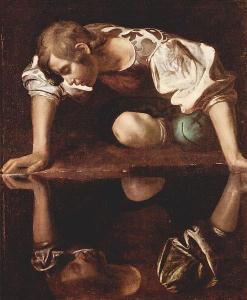
Because it’s all about me.
*snort!
I was chatting with the husband the other day about a comment a fellow RWA local made to me about Facebook being really just an exercise in narcissism. At the time I had no real comeback for her other than a sorta ‘…well…oh yeah…!’
I wasn’t really articulate that day.
But I’ve thought about it a lot. And paid attention to my Facebook usage and you know…she’s right but she’s wrong. It’s about me, but it’s also about you. Or whoever is on Facebook. It’s a community that supports each other. (At least on my newsfeed. I know others end up with a lot of battling and name calling, but not mine.)
Ever notice how many people post when they are feeling depressed and the call goes out that one of our own is in need. Suddenly, stories appear about personal demons, how one person made it work, and things got better. It makes one feel less alone.
It also works if you need a new recipe for chicken. Ask on Facebook, you’ll get a ton of ideas.
Of course, it’s a time suck, but my god, since I have an ongoing battle with depression, I find Facebook a sweet way to duck the isolation that is my life and feel like I am part of things. And console myself with the thought that people care. And perhaps that is narcissistic, but if I don’t believe people care about me…well, why should I care about me? Why should anyone buy my books or read what I write? It is all about me. At the heart of things.
As an author, I am told to promote, promote, promote! Well, I do, but I try to keep it simple and not shove my books in people’s face. Same with Twitter. But I do understand it’s a fine line.
When I went to see Jeff Dunham last week, I paused and twice, I posted to FB about being at the show. Why? Because there might be people out there who would enjoy hearing about Jeff, and it might start a conversation. I write books, I need people to find me interesting. Or if not interesting, then I hope they think I do interesting things.
I’m not faking anything I post, but I am putting myself out there. And I might get slapped down, I might find a gremlin who will attack me for no other reason than they are in a bad mood. (Which is why I love the bury this feed option.)
The new era of social media is very ‘me’ oriented. But it’s also very ‘we’ oriented. It’s all in the perspective.
I’m getting ready to leave for my first convention of the spring/summer and I blather about RT on FB. I hope people will stop by and see me because they read something I posted on FB. Or want some of the swag I put up. Of course, I’m selling myself! It’s my job!
What is your take on the whole FB, Twitter, Goggle+, stuff? Is it self-centered gibberish or is it a community to you?
ApriWriMo: Revenge Style - Week 1

Scapegoat's ABCs for Writers: Accountability

I've been reflecting on three particular things I’ve discovered as essential keys to developing and thriving as a writer. I’m calling it Scapegoat’s ABCs for Writers as I consider these great building blocks for new and seasoned writers alike.
Presenting the “A” in Scapegoat’s ABCs for Writers:
A – Accountability
I need it and I believe, whether they want to admit it or not, most other writers need accountability too. I’m breaking it down to two types of accountability, personal and writing partners/groups. I firmly believe both types are essential to getting your writing groove on and doing your best work.
Personal Accountability:
When I talk about personal accountability I’m sure everyone wants to cover their ears and go “la la la” but be honest with yourself. Admit that whenever you've held yourself accountable to a certain goal, word count, or even BICHOK you’ve achieved more, felt better about yourself, and I guarantee your writing gained momentum.
Part of personal accountability is setting those small, daily goals for you. These aren’t even your BIG GOALS. Accountability is about the small things you do day in and day out for your writing. For organization lovers like me, creating a tracking spreadsheet could be just the ticket, but for others it could be as simple as reminding yourself of what you did while you brush your teeth at night. On social media? What about just tweeting or posting your progress everyday. It’s not about anyone answering back; it’s about owning your progress or roadblocks.
The BIG question: If you aren't honestly answering to yourself about your writing, then how do you expect to move forward or grow as a writer?
Personal accountability isn’t about berating yourself, it’s about learning how to work better, faster, easier and create a book you’ll be proud of.
Group/Partner Accountability:
Partner or group accountability isn’t about Who’s Got The Biggest/Best Manuscript or Who Writes The Most. If you have that kind of group or partner run for the hills!
For some, it’s about connecting with other writers and sharing in the journey together. The focus might be general in nature and focus on how your writing is progressing or questions you have. Basically, it’s your support group that keeps you wanting to have something to contribute and feeling as if you are tied to helping each other succeed.
For others, this can take the form of checking in with weekly word or page counts. Maybe it’s #1k1hr on twitter with whoever joins in or a monthly challenge such as the one Marnee and I recently participated in.
These shorter challenges make you accountable to a group or partner in a way that you might not always get. Something about “revealing your number” can be extremely motivating and allows those who don’t normally feel comfortable tracking their daily/weekly counts to be a little more accountable.
For most writers, I think the most successful strategy is to use a combination of the two. It’s where I’ve thrived as a writer. Since becoming more accountable to both myself, my writing partners, and even to strangers in a writing challenge, my writing has exploded.
Don’t believe me? I made March the first month I was truly accountable to myself and my writing partners and you know what happened? In March I wrote 10 times what I did in January and February combined. Accountability is a key to success.
So when are you going to get serious about accountability? Does the word make your skin crawl or have you discovered this writing super power for yourself? Have tips or tricks for tracking your progress or creative ideas for helping non-organizers stay accountable? What about finding your group or partner, any good advice?
Expect to see upcoming posts from me on the other two building blocks in my Scapegoat’s ABCs for Writers series. Next time we’ll tackle “B” – BALANCE.
Wagons East!: Turning Up the Tension
For me, the Writer’s Compass (for the Directionally Challenged) primarily focuses on character and conflict. North and South. And even now, a lot of time is spent debating on who has the bigger dog in the fight: the north or the south. Good arguments can be made for both sides; we’ll never agree. (It’s North, I tell you, NORTH is the bigger dog.) But in our bid to win our arguments about if it’s our characters that should be bigger or our plot, we forget about our East and our West. Which is a shame because although both of these directions are shamefully underrated while standing next to their flashier, cooler counterparts, the fact is you wouldn’t have a story without them either.
Ironically, the East—despite not being as “important” as the North—is a lot harder to manage because you have to be subtle, pervasive, and never, ever give the characters what they really want. You’re told to be big and bold with your characters, to give big problems and blow stuff up with your conflict—and now you have to simultaneously be as subtle and sly as a covert operator to plant the tension and suspense of “will they or won’t they” in between the lines of your action.
The tension in your novel—sexual, situational, relationship—makes the pages hum. The conflict of a story gives us reason for concern, like a physical thing, but the tension makes it personal. It taps into readers’ emotions. You want to make your story personal, empathetic, draw your readers in until they can’t stop reading until the last page is read. You always want the reader to be concerned about your characters. (See, told you that North was the bigger dog.)
I think the number one reason why romance novels get dinged for being “sex books” rather than “romantic stories” is that it’s a very fine line to walk between romance and sex. As authors, it’s key to make sure we know that the hero and heroine are meant for each other, and in romance, there is a constant hyper-awareness of the other person. In a way they’ve never felt for any other person.
Sexual tension has to be as plausible as your conflict. Sexual tension is not the same as constantly being aware of how good he smells, or if he touches your hand for the first time, electrical shocks go to that special place. Tingles or gushing…or a rush of moisture. Believe me, I’ve read it; and believe me, I’ve mocked it. I’m not always able to articulate what sexual tension is, but I do know what it isn’t.
Sexual tension is just as much about emotional response as the physical one. In fact, when it comes to our romance, the emotion is the part we really care about. I think this is why this requires some subtly—emotion requires a patient hand. You can’t beat people over the head or tell them what they should feel. You have to show them what aches and why, tie up the emotional connections between your characters and their past so we can all believe the love story as it develops.
It’s hard to ignore articles that tell you to write your sex scenes hotter-hotter-hotter; and I’m not trying to steer you from that. Write as hot as you are comfortable with—that’s the key phrase—and write what you enjoy reading. If you’re adding sex for sex’s sake, or dumping in “tension” in the form of physical attributes only, you’re missing out on the big picture. Romance. It’s always romance first. Romance and angst—what is romantic and what is the angst the character is feeling?
Sex is tricky in written form. To demonstrate affection and bonding between a new couple, sex is a straightforward way to show how feelings have changed, show how characters feel even if they’re not willing to say it. Sex can be incredibly romantic, exactly what is called for; however, it can’t be denied that writing a scene between characters who want to make love but can’t can be wayyyyy hotter. Your scenes where they aren’t having sex should be as hot if not hotter than the ones where they are.
Romantic love is all about the anticipation and the potential heartbreak, the risk. It makes for excellent tension. It’s great for amplifying conflict; it’s perfect for creating empathy for your characters. See how necessary the East turned out to be? It’s like a flavor booster.
What ways do you use in your writing to show tension? Do you try to make sexual tension as much about the emotional as the physical? Have you read any books lately that handled the sexual tension particularly well?
Books by the Crew


